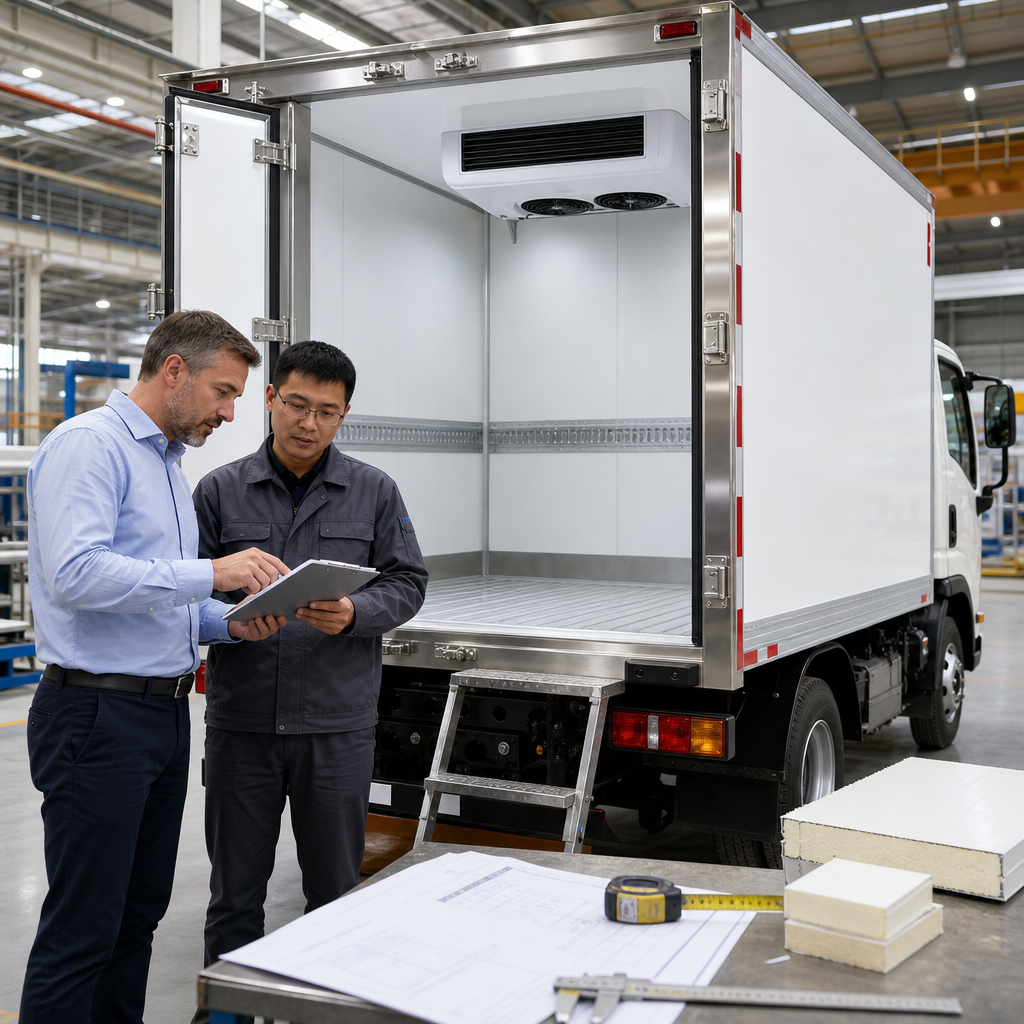
Choosing a china refrigerated truck manufacturer is rarely just a product decision. For project buyers, importers, distributors, and fleet managers, it is a risk decision first. The visible question is often about body dimensions, cooling capacity, chassis brand, or lead time. The hidden question is more serious: Will this supplier help us deliver a reliable cold-chain asset without delays, disputes, rework, or operating surprises?
That is why many buyers keep comparing quotes from every refrigerated truck manufacturer in China yet still fail to reduce real project risk. Low price, a polished brochure, or a copied spec sheet can look reassuring. But they do not guarantee thermal performance, serviceability, compliance readiness, or lifecycle cost control.
This article explains how professional buyers can evaluate a china refrigerated truck manufacturer more effectively, using a practical spec-sheet lens and case-style sourcing scenarios.
Why project buyers still get poor outcomes after comparing multiple suppliers
A common sourcing pattern goes like this:
- Collect 5 to 10 quotations
- Compare chassis, box size, and cooling unit headline specs
- Push for lower pricing
- Choose the supplier that appears to offer the most equipment for the least money
On paper, this looks rational. In practice, it often creates avoidable risk.
The problem is that refrigerated truck procurement is not only about buying a vehicle. It is about securing a temperature-controlled delivery system that must perform under real operating conditions: route density, ambient heat, loading frequency, service support, spare parts access, and local regulatory expectations.
When buyers focus only on product comparison, they may miss the following:
- Mismatch between payload needs and refrigeration unit capacity
- Incomplete insulation details on the body structure
- Weak door sealing and thermal leakage points
- Limited after-sales coordination between body builder and cooling unit supplier
- Unclear homologation or documentation support
- Long lead-time exposure on key components
- Hidden maintenance costs over the first 12 to 36 months
In other words, the risk is not just “buying the wrong truck.” The risk is operational underperformance after the truck enters service.
The real sourcing goal: reduce uncertainty, not just purchase cost
A good refrigerated truck manufacturer should help the buyer reduce uncertainty in five areas:
- Technical fit
- Delivery reliability
- Compliance readiness
- Service continuity
- Total cost over time
This is especially important for buyers handling tenders, public-sector procurement, distributor stocking programs, food logistics expansion, pharma transport projects, or multi-unit cold-chain fleet deployment.
The strongest sourcing outcome is not the cheapest truck. It is the truck program that gives the buying team confidence that the units will arrive, perform, and remain supportable.
What to check first on a refrigerated truck spec sheet
A spec sheet is useful, but only if you know what it does not show clearly. Many refrigerated truck manufacturers china listings provide dimensions and top-level features without enough performance context.
Here is a more practical review framework.
1. Chassis-platform suitability
Check whether the chassis matches your actual route and payload profile, not just your budget.
Review:
- Gross vehicle weight rating
- Payload allowance after body and refrigeration system installation
- Engine output and torque band
- Transmission type
- Wheelbase and turning radius
- Suspension configuration for road quality and cargo sensitivity
For buyers considering established chassis platforms, including programs often compared with isuzu refrigerated truck manufacturers, the key question is supportability in your target market. Parts access and technician familiarity can matter as much as initial brand preference.
2. Body insulation construction
The body is not a simple box. It is a thermal control structure.
Ask for:
- Wall, roof, and floor panel thickness
- Insulation core material
- Panel joining method
- Internal and external skin materials
- Floor anti-slip and hygiene finish
- Door frame reinforcement
- Seal design and latch quality
If this information is vague, risk increases. Two trucks with similar outside dimensions can perform very differently if insulation quality and build precision are not consistent.
3. Refrigeration unit matching
Cooling unit selection should be based on duty cycle, cargo type, and operating environment.
Check:
- Temperature range
- Pull-down performance conditions
- Fresh vs frozen application suitability
- Standby power option if required
- Maintenance interval expectations
- Local service and spare parts availability
A useful benchmark is whether the supplier can explain why a given unit is appropriate, not just state the model number.
For buyers reviewing integrated options, MagiTruck’s refrigerated truck commercial cooling unit solutions can help frame the discussion around system matching rather than component-only selection.
4. Door, airflow, and cargo-handling details
These are often overlooked, yet they affect temperature retention and operational speed.
Review:
- Rear and side door configuration
- Curtain or partition options
- Airflow channel design
- Internal cargo securing points
- Drainage and cleanability
- Frequent-stop suitability for urban delivery
5. Documentation and validation package
A reliable refrigerated truck manufacturer should be able to provide a structured document set, not just a sales PDF.
Ask for:
- Detailed vehicle specification
- Body drawings
- Refrigeration unit documentation
- QC process outline
- Pre-delivery inspection checklist
- Photos or videos of in-process builds
- Export packing/loading plan
- Warranty terms
- Spare parts recommendation list
Case-style sourcing scenarios: where project risk usually appears
Below are three realistic buyer scenarios. These are not presented as hard performance claims, but as patterns seen repeatedly in commercial vehicle procurement.
Case 1: The lowest quote wins, but operating cost rises
A regional food distributor sourced several units from a low-cost refrigerated truck manufacturer in China after a spreadsheet comparison showed apparent savings per vehicle.
What went wrong?
- Insulation detail was not fully verified
- The refrigeration unit was technically adequate on paper, but not ideal for frequent door openings
- Door hardware degraded faster than expected in intensive urban use
- Temperature recovery time created route inefficiencies
The buyer did not fail because they ignored specs. They failed because they treated specs as complete truth rather than a starting point.
Lesson: Project risk often hides in application mismatch, not only in obvious product defects.
Case 2: The supplier looked strong, but coordination was weak
An importer selected a supplier with polished presentations and broad model coverage. However, the truck body, chassis, and cooling system were coordinated by different parties with unclear accountability.
The result:
- Delays during pre-shipment inspection
- Confusion over wiring and interface responsibility
- Slower after-sales response because each party redirected questions
Lesson: A sourcing program is safer when one lead supplier owns integration responsibility and communicates clearly across chassis, body, and refrigeration components.
For buyers evaluating complete build concepts, a platform such as the high roof reefer van from MagiTruck is worth reviewing not just as a product, but as an example of integrated body-and-cooling planning.
Case 3: The buyer chose the right truck, but the wrong future path
A fleet operator procured diesel refrigerated vehicles for a current contract, but failed to consider upcoming urban emissions pressure and broader fleet transition planning.
The procurement itself was sound. The strategy was incomplete.
In some markets, buyers are now reviewing not only cold-chain assets but adjacent fleet electrification pathways. For companies building long-term municipal or commercial vehicle relationships, broader product visibility matters. That is one reason some operators also track solutions such as new energy battery swap truck platforms when planning future procurement phases.
Lesson: Good sourcing reduces current risk. Great sourcing also reduces future transition risk.
How to evaluate a China refrigerated truck manufacturer beyond the brochure
Ask better questions, not just for better prices
Professional buyers usually know how to negotiate. The bigger advantage comes from knowing what to ask before negotiation begins.
Use this checklist:
- What operating temperature range was this truck designed for?
- What is the insulation panel construction and thickness by section?
- How is the refrigeration unit sized for my route profile?
- What components are sourced in-house vs externally?
- Who owns final integration quality control?
- What documentation is supplied before shipment?
- How are warranty claims handled across chassis, body, and cooling unit?
- What spare parts should be ordered with the first batch?
- What is the realistic production lead time, including key component risk?
- Can the supplier share reference build photos or comparable project configurations?
H3: Red flags on a spec sheet
Watch for these warning signs:
- Missing insulation material details
- Vague wording such as “high quality” without measurable description
- Cooling unit model listed with no application context
- No mention of door sealing or floor structure
- Generic photos that do not match the offered configuration
- Inconsistent dimensions between quote and drawing
- Warranty language that is too broad or undefined
If the sheet looks complete but still leaves these questions unanswered, the issue is not paperwork volume. It is decision visibility.
What trustworthy suppliers do differently
A credible china refrigerated truck manufacturer usually demonstrates trust in quieter ways:
- Clear and consistent documentation
- Measured answers instead of exaggerated claims
- Willingness to mark uncertain items as [TO CONFIRM]
- Realistic lead times instead of optimistic promises
- Structured communication during design, production, and shipment
- Understanding of end-use conditions, not just factory output
This matters because project buyers are not merely purchasing equipment. They are protecting delivery schedules, internal reputation, customer service levels, and budget predictability.
A practical risk-reduction framework for sourcing teams
If you want a direct answer, here it is:
The safest way to source from a refrigerated truck manufacturer in China is to validate system fit, integration ownership, documentation quality, and after-sales logic before you negotiate the final price.
A simple framework:
- Define your route, product temperature, load pattern, and compliance needs
- Shortlist only suppliers that can respond with technical clarity
- Review body insulation and cooling-unit matching in detail
- Confirm documentation package and QC checkpoints
- Align spare parts, service expectations, and lead-time contingencies
- Negotiate commercial terms only after technical risk is reduced
This approach often saves more money than aggressive price negotiation alone.
[Image suggestion: Procurement manager reviewing refrigerated truck spec sheet with chassis drawing and insulation cross-section. Alt text: “Project buyer reviewing refrigerated truck manufacturer spec sheet and body insulation details”]
[Image suggestion: Cold-chain delivery truck loading at warehouse dock with door seals and reefer unit visible. Alt text: “Refrigerated truck at warehouse loading dock showing cold chain delivery setup”]
[Image suggestion: Quality inspection checklist beside completed reefer truck before shipment. Alt text: “Pre-shipment quality inspection for refrigerated truck manufacturer export order”]
Compliance and safety context still matter
Even when sourcing internationally, buyers should stay anchored to credible commercial vehicle safety and operating guidance relevant to their market. For example, the FMCSA is a useful authority reference for broader vehicle safety, maintenance, and operational awareness in regulated transport environments.
The point is not that every market uses the same rules. The point is that serious buyers treat safety, maintenance discipline, and documentation as part of procurement quality—not as afterthoughts.
FAQ: China refrigerated truck manufacturer sourcing
How do I choose a reliable china refrigerated truck manufacturer?
Start by verifying technical clarity, body insulation details, refrigeration-unit matching, integration responsibility, documentation quality, and after-sales support. Price should come after fit and risk review, not before.
What should be included in a refrigerated truck spec sheet?
A useful spec sheet should include chassis data, body dimensions, insulation construction, panel materials, floor structure, door configuration, refrigeration unit model, temperature range, and documentation or warranty notes. If key thermal or structural details are missing, ask for more before moving forward.
Is the cheapest refrigerated truck manufacturer in China usually the best option?
Not necessarily. Lower upfront pricing can lead to higher lifecycle cost if the truck has poor insulation performance, weak hardware, limited service support, or mismatched cooling capacity. Total cost and operational reliability matter more than quotation rank alone.
Why do buyers compare many refrigerated truck manufacturers but still face project problems?
Because they often compare visible specs instead of hidden execution risk. The biggest failures usually come from incomplete documentation, weak integration, unclear accountability, or poor application matching rather than from obvious brochure differences.
Are Isuzu-based refrigerated trucks always the safest choice?
An Isuzu-based platform can be a strong option in many markets, especially where parts and service familiarity are established. But the chassis brand alone does not guarantee a successful refrigerated vehicle program. The body build quality, thermal design, and support structure still determine long-term results.
Conclusion
A successful refrigerated truck purchase is not just about finding a competitive supplier. It is about reducing the uncertainty that creates delays, claims, underperformance, and internal pressure later.
If you are evaluating a china refrigerated truck manufacturer, focus less on who says the most and more on who makes risk easier to see, measure, and manage. That is where stronger sourcing decisions come from.
If you are planning a reefer truck project and want a clearer technical discussion, explore MagiTruck’s refrigerated truck solutions or contact the team to review your application requirements before finalizing your supplier shortlist.