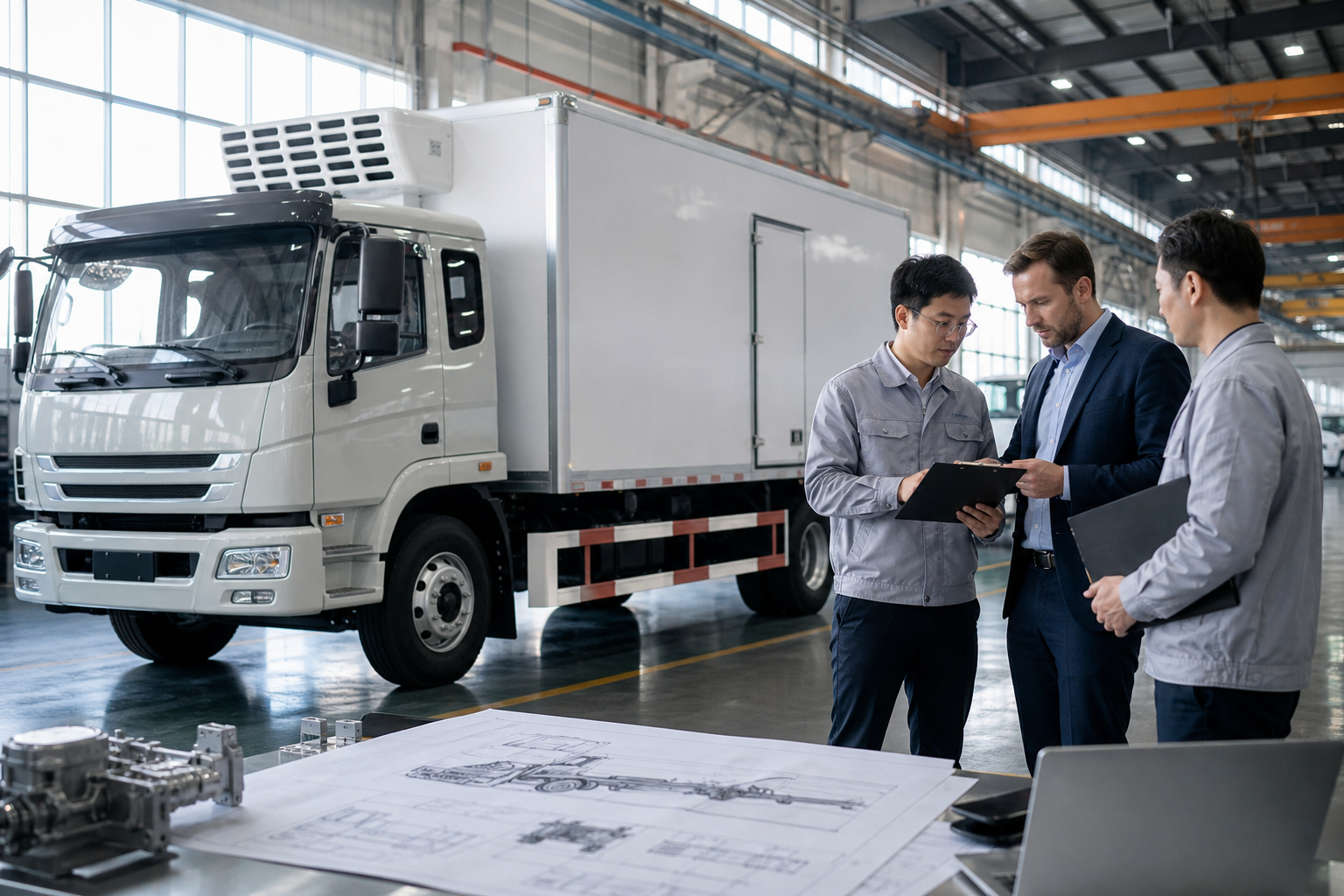
Selecting a china refrigerated truck manufacturer is not only about price. For project buyers, fleet operators, distributors, and procurement teams, the real decision comes down to lifecycle cost, cold-chain performance, after-sales support, and whether the vehicle specification truly matches the route, payload, and temperature requirement. This checklist is designed to help buyers compare a refrigerated truck manufacturer on practical terms: chassis quality, reefer unit performance, insulation structure, compliance documents, and serviceability. It also includes project-focused case study scenarios so buyers can evaluate a refrigerated truck manufacturer in china with more confidence.
A refrigerated truck is a system, not a single product. The truck chassis, insulated box body, refrigeration unit, electrical system, door sealing, and maintenance network all affect uptime. That is why experienced buyers review the full spec sheet before requesting a quotation.
Why project buyers need a structured checklist
For many tenders and fleet purchases, the technical risk is higher than the purchase risk. A refrigerated vehicle may look similar across suppliers, but differences in compressor brand, panel thickness, floor design, temperature pull-down speed, and spare parts availability can significantly change performance.
A structured checklist helps buyers:
- Compare multiple refrigerated truck manufacturers china on equal criteria
- Reduce ambiguity in quotations and technical proposals
- Identify hidden operating costs early
- Improve bid documentation and internal approvals
- Match the truck to urban delivery, intercity transport, pharmaceutical use, or frozen food distribution
In short: the right supplier is the one that can document, configure, and support the vehicle for your actual cold-chain job.
Buyer checklist: what to review before choosing a manufacturer
1. Confirm the operating profile first
Before evaluating suppliers, define your use case clearly. A good china refrigerated truck manufacturer will ask about:
- Required temperature range: chilled, frozen, or multi-temperature
- Product type: dairy, seafood, meat, produce, medicine, flowers
- Payload requirement
- Route length and delivery frequency
- Ambient temperature in your market
- Loading pattern: frequent door openings or long-haul continuous cooling
- Local compliance and registration requirements
This first step prevents over-specifying or under-specifying the vehicle.
2. Check the chassis brand and drivetrain suitability
The chassis is the foundation of reliability and maintenance economics. Review:
- GVW and payload capacity
- Engine power and torque
- Fuel type and fuel efficiency
- Wheelbase and turning radius
- Suspension for load stability
- Brake system and safety equipment
- Availability of service parts in your region
For many buyers, brand familiarity matters. That is why searches for isuzu refrigerated truck manufacturers remain common in markets where Isuzu-based service networks are strong. However, the best fit depends on route conditions, service access, and budget.
If you are evaluating a practical reference model, review this JAC refrigerated truck with Thermo King BAR20 configuration to see how chassis and reefer specifications are presented together.
3. Review the refrigerated box construction in detail
The box body largely determines thermal retention. Ask for these details on the spec sheet:
- Box internal dimensions and external dimensions
- Insulation material type
- Panel thickness for roof, side walls, floor, and doors
- Inner and outer skin material
- Floor finish: anti-slip aluminum or reinforced floor
- Rear door sealing structure
- Side door option, if needed
- Drainage design and hygiene features
A strong insulated body reduces compressor workload and helps maintain temperature during loading and unloading.
Direct answer: A reliable refrigerated truck body should have consistent insulation thickness, durable skin materials, tight door seals, and a floor structure suited to pallet traffic or hand loading. Buyers should request cross-section drawings if available.
4. Evaluate the refrigeration unit, not just the brand name
The refrigeration unit is often compared only by brand, but project buyers should go deeper. Review:
- Cooling capacity at specific temperature setpoints
- Performance under high ambient temperatures
- Pull-down time from ambient to target temperature
- Evaporator and condenser configuration
- Standby power option availability
- Refrigerant type
- Noise level, if urban delivery applies
- Spare parts support and service intervals
Well-known reefer brands can be an advantage, but only if the selected model is correctly matched to the box volume and duty cycle. A smaller unit may reduce initial cost but increase spoilage risk and maintenance stress.
For example, a Thermo King-equipped refrigerated truck specification may be suitable for buyers who prioritize recognized cold-chain components and easier service planning.
5. Ask for temperature validation and test data
A professional refrigerated truck manufacturer in china should be able to provide documentation such as:
- Temperature performance test results
- Insulation or K-value references
- Factory inspection records
- Reefer unit data sheets
- Chassis certificate and body compliance information
- Photos or videos of completed units
For food logistics and regulated sectors, documented validation is more useful than verbal assurances.
6. Inspect electrical and control system integration
Modern refrigerated trucks are increasingly judged by usability and uptime. Key details include:
- Driver cabin control interface
- Temperature display and alarm functions
- Data logger compatibility
- Battery and alternator capacity
- Fuse and harness routing
- Interior lighting
- Reverse camera or telematics options
A vehicle that is easy to monitor and diagnose will typically reduce downtime in fleet operation.
7. Verify after-sales support and spare parts access
This is one of the biggest differences between suppliers. Ask:
- What is the warranty scope for chassis, box body, and refrigeration unit?
- Which parts are stocked?
- Are operating manuals available in English or local language?
- Is remote technical support available?
- What are the average lead times for service parts?
A capable refrigerated truck manufacturer should explain support boundaries clearly, especially when the chassis and refrigeration unit involve different OEMs.
Spec sheet focus: the most important fields buyers often miss
Many buyers compare headline numbers but miss the fields that affect operation most. Pay attention to the following:
Gross vehicle weight vs usable payload
The listed payload is only meaningful when matched against actual cargo density, pallet configuration, and any optional equipment. Heavy box construction or an oversized refrigeration system can reduce usable payload.
Box volume vs refrigeration capacity
A larger box is not automatically better. Cooling capacity must match box volume, insulation quality, and route conditions. In hot climates, underpowered units can struggle even if the nominal box volume seems acceptable.
Floor strength and loading method
If the truck will carry roll cages, pallets, or frequent hand trolley traffic, floor construction matters. Weak floor design can lead to early wear and hygiene issues.
Door opening frequency
Multi-drop urban delivery creates thermal shock. Buyers should ask whether strip curtains, partition options, or fast-recovery unit settings are available.
Compliance and road operation considerations
Transport buyers should verify regional safety and roadworthiness expectations. For general commercial vehicle safety guidance in the U.S. market, the Federal Motor Carrier Safety Administration offers useful regulatory information and reference resources.
Project case studies: how checklist decisions change by application
Below are simplified buying scenarios that reflect how experienced procurement teams evaluate refrigerated truck manufacturers.
Case study 1: City food distribution fleet
Project profile: A distributor needs 6 units for daily delivery of dairy and processed foods within a city, with 20 to 30 stops per route.
What mattered most:
- Frequent door opening recovery
- Reliable urban maneuverability
- Easy maintenance access
- Cabin ergonomics
- Moderate box size for mixed-route delivery
Buying decision logic: In this case, the lowest-price unit may not be the most economical. Frequent stop-start operation puts pressure on seals, hinges, and reefer performance. The buyer should prioritize durable body hardware, proven refrigeration performance, and service support over minimum capital cost.
Case study 2: Frozen seafood transport in hot climate
Project profile: A regional logistics company needs deep-frozen performance over longer routes in high ambient temperatures.
What mattered most:
- Strong low-temperature pull-down capability
- Thick insulation panels
- Tight rear door sealing
- Higher cooling capacity margin
- Stable chassis performance under full load
Buying decision logic: This buyer should request test references and detailed reefer capacity data, especially at high ambient temperatures. Here, box construction quality and compressor matching matter more than cosmetic options.
Case study 3: Institutional procurement or aid project
Project profile: A public-sector or donor-funded program requires refrigerated transport with clear documentation, standardization, and predictable delivery.
What mattered most:
- Complete technical file
- Repeatable specifications
- Transparent warranty terms
- Export packing and shipping coordination
- Pre-delivery inspection documentation
Buying decision logic: For institutional buyers, documentation quality is often as important as the truck itself. The ideal china refrigerated truck manufacturer is one that can support compliance review, provide consistent production records, and communicate changes clearly.
How to compare quotations from refrigerated truck manufacturers
When comparing suppliers, use a line-by-line matrix instead of a total-price comparison only. Include:
- Chassis make and model
- Engine and emission level
- Box dimensions and insulation thickness
- Reefer brand and model
- Standard equipment
- Optional equipment
- Warranty coverage
- Spare parts package
- Production lead time
- Shipping terms
- Documentation included
This approach makes it easier to evaluate different refrigerated truck manufacturers without losing sight of technical equivalence.
Red flags when sourcing from a refrigerated truck manufacturer in China
Not every supplier operates at the same standard. Watch for these warning signs:
- Unclear or incomplete technical sheets
- No distinction between standard and optional configuration
- Vague answers on insulation thickness
- No mention of reefer unit model
- No evidence of export support or previous overseas projects
- Warranty promises without written terms
- Pricing that is unusually low without explanation
A serious refrigerated truck manufacturer in china should be comfortable discussing engineering details, lead times, and service limitations in writing.
Image suggestions for this article
[Image placement: after the introduction — Alt text: “China refrigerated truck manufacturer production line and insulated box body assembly”]
[Image placement: in the spec sheet section — Alt text: “Refrigerated truck specification sheet showing chassis, box dimensions, and reefer unit details”]
[Image placement: near the case studies section — Alt text: “Cold-chain delivery refrigerated truck loading food products for urban distribution”]
FAQ: China refrigerated truck manufacturer buyer questions
What should I ask a china refrigerated truck manufacturer before buying?
Ask about chassis brand, refrigeration unit model, insulation thickness, box dimensions, payload, warranty, spare parts support, and temperature test data. These details affect real operating performance more than brochure photos.
How do I compare refrigerated truck manufacturers fairly?
Use a technical comparison sheet with the same criteria for every supplier. Compare chassis, reefer capacity, insulation structure, standard equipment, service support, and documentation. Do not compare by total price alone.
Is a branded refrigeration unit enough to guarantee quality?
No. A branded unit helps, but performance depends on matching the unit to the box size, insulation quality, route conditions, and door-opening frequency. System integration matters as much as brand selection.
Why do buyers search for isuzu refrigerated truck manufacturers?
Many buyers prefer Isuzu-based solutions because of regional service familiarity, resale confidence, and known maintenance networks. However, the right chassis depends on payload, road conditions, budget, and local service support.
What documents should a refrigerated truck manufacturer provide?
Buyers should request a quotation, full spec sheet, reefer data sheet, inspection records, warranty terms, and relevant chassis or body compliance documents. Export buyers may also need packing and shipping documentation support.
Conclusion
Choosing a china refrigerated truck manufacturer requires more than a quick price comparison. Project buyers get better results when they review the full spec sheet, validate refrigeration performance, and assess support after delivery. The most reliable sourcing decisions come from matching the truck configuration to the actual cold-chain job.
If you are evaluating options for your fleet or project, start with a documented reference configuration such as this refrigerated truck product page with Thermo King BAR20 setup. For tailored recommendations, contact MagiTruck to discuss your route profile, temperature target, and procurement requirements.